



Top 5 KSA PDPL Compliance Software Platforms for Enterprises (2026 Guide)
Introduction
Saudi Arabia’s Personal Data Protection Law (PDPL) has become a major compliance priority for enterprises operating in the Kingdom.
Organizations handling personal data need practical processes for areas such as data governance, processing activities, data subject rights, privacy documentation, risk management, and regulatory evidence.
For enterprises in Riyadh, Jeddah, Dammam, and other Saudi markets, the challenge is that many privacy and GRC platforms were originally designed around global frameworks such as GDPR or CCPA. While these tools can support privacy programs, they may require additional configuration for Saudi-specific requirements, terminology, documentation, and data-hosting considerations.
This guide compares five platforms enterprises may evaluate for KSA PDPL compliance in 2026, with a focus on Saudi-specific requirements, SDAIA alignment, data residency, Arabic-language support, and implementation effort.
Quick Comparison: KSA PDPL Compliance Software (2026)
| Platform | Built for KSA PDPL | Saudi Data Residency | SDAIA Control Mapping | Arabic Language Support | Best For |
|---|---|---|---|---|---|
| Sahl | Yes — KSA-first design | Saudi-compliant infrastructure | Direct PDPL & SDAIA mapping | Full Arabic + English | Saudi enterprises, government vendors, regulated sectors |
| OneTrust | Retrofitted from a global privacy framework | Varies by hosting and contract | Partial; configuration may be required | Available with limitations depending on product/configuration | Large multinationals already using OneTrust |
| Vanta | Primarily SOC 2 / ISO-focused | Not KSA-specific by default | Custom framework setup may be required | Limited KSA-specific support | Startups combining security and light privacy compliance |
| Drata | Primarily SOC 2 / ISO-focused | Not KSA-specific by default | Custom framework setup may be required | Limited KSA-specific support | US/EU-focused SaaS companies |
| Securiti / TrustArc | Broad global privacy platforms | Residency depends on deployment | Requires KSA-specific configuration | Varies by product | Enterprises running broader global privacy programs |
Note: Feature availability, hosting options, pricing, and regional support can change. Always confirm current data residency, contractual terms, Arabic support, and PDPL/SDAIA coverage directly with each vendor before purchasing.
1. Sahl — Best for Saudi-Native PDPL Compliance
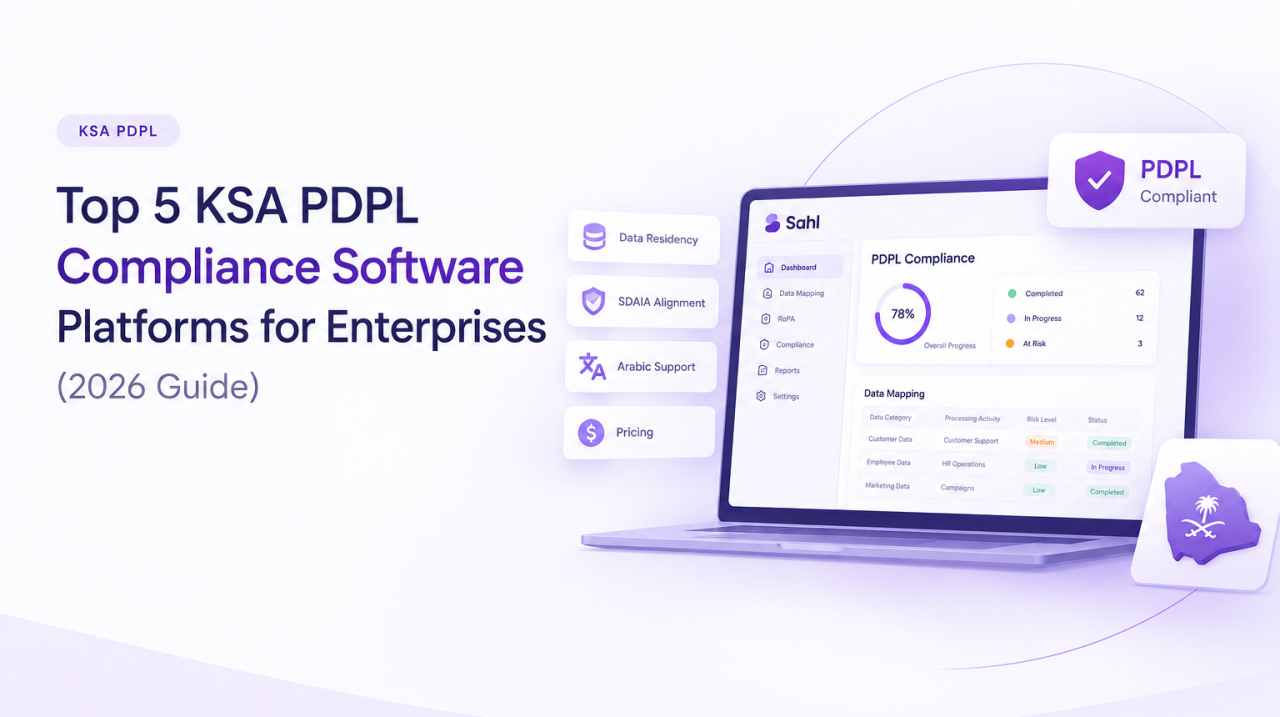
Sahl is designed specifically around the Saudi regulatory environment, making it a strong option for organizations that need a KSA-first approach to privacy compliance.
Instead of starting with a generic global privacy framework and adapting it to Saudi Arabia, Sahl focuses directly on PDPL and SDAIA requirements.
Key advantages
- Native PDPL and SDAIA templates
- Pre-mapped compliance controls
- Saudi-focused compliance workflows
- Arabic and English evidence and reporting
- Data hosting designed around Saudi compliance requirements
- Faster implementation for Saudi enterprises
- Suitable for government vendors and regulated organizations
For organizations searching for KSA PDPL software that is designed around the Saudi regulatory context, Sahl can reduce the configuration and interpretation work typically required with a global GRC platform.
Best for: Saudi enterprises, government suppliers, regulated sectors, and organizations that want a KSA-first privacy compliance program.
Explore Sahl’s KSA PDPL Compliance Platform
2. OneTrust — Best for Large Global Privacy Programs
OneTrust is one of the most established enterprise privacy and governance platforms. It supports a broad range of privacy, governance, risk, and compliance use cases.
For multinational organizations already using OneTrust, extending an existing privacy program to cover Saudi Arabia may be more practical than introducing another platform.
However, organizations should carefully evaluate how much KSA-specific configuration is required, including PDPL control mapping, evidence requirements, localization, and data residency.
Key advantages
- Broad global privacy functionality
- Large enterprise ecosystem
- Extensive privacy management capabilities
- Useful for organizations managing multiple international regulations
Best for: Large multinational enterprises with existing OneTrust deployments and global privacy programs.
3. Vanta — Best for Security-Led Compliance Teams
Vanta is primarily known for automating security and compliance frameworks such as SOC 2 and ISO 27001.
For organizations that already use Vanta, the platform may provide useful supporting capabilities around security controls and compliance evidence. However, organizations seeking dedicated KSA PDPL functionality should evaluate how much custom configuration is required.
Key advantages
- Strong security compliance automation
- Automated evidence collection
- Useful integrations
- Familiar workflow for SaaS companies
Best for: Startups and SaaS companies where SOC 2/ISO compliance is the primary requirement and PDPL is an additional privacy obligation.
4. Drata — Best for Security Compliance Automation
Drata is another compliance automation platform with a strong focus on security frameworks and automated evidence collection.
Its capabilities can help organizations establish broader governance and compliance processes, but Saudi organizations should assess the level of customization required to translate their existing framework into a KSA PDPL-specific program.
Key advantages
- Automated compliance workflows
- Evidence collection
- Security framework support
- Integrations with business and IT systems
Best for: SaaS and technology companies that primarily need security compliance automation alongside privacy requirements.
5. Securiti / TrustArc — Best for Global Privacy Programs
Securiti and TrustArc offer broader privacy management capabilities and can be relevant for enterprises managing privacy requirements across multiple jurisdictions.
Their global approach can be useful when an organization needs to manage several privacy laws within one program. However, Saudi enterprises should evaluate whether KSA-specific controls, localization requirements, Arabic documentation, and SDAIA mappings are available out of the box or require additional configuration.
Key advantages
- Global privacy management
- Support for multiple privacy frameworks
- Enterprise privacy workflows
- Useful for organizations with multinational operations
Best for: Enterprises with mature global privacy programs that need to incorporate Saudi Arabia into a wider regulatory environment.
Why Global GRC Tools Can Struggle With KSA PDPL
Global compliance platforms are generally designed to support multiple regulations simultaneously. This is valuable for multinational organizations, but it can also mean that Saudi-specific requirements require additional configuration.
Three areas deserve particular attention.
1. Data Residency and Cross-Border Transfers
Saudi organizations should evaluate where their compliance platform stores and processes data and how its hosting architecture aligns with applicable Saudi requirements.
A vendor should be able to clearly explain its hosting locations, subprocessors, data-transfer mechanisms, and contractual commitments.
2. Arabic Documentation and Evidence
Privacy compliance is not only about having a dashboard.
Organizations may need policies, evidence, reports, workflows, and documentation that work effectively for Arabic-speaking stakeholders, auditors, and regulatory interactions.
A platform with meaningful Arabic support can therefore reduce translation and documentation overhead.
3. SDAIA and PDPL Control Mapping
PDPL should not simply be treated as another checkbox inside a generic GDPR framework.
Organizations should understand how the platform maps Saudi requirements to actual controls, evidence, policies, processing activities, and remediation workflows.
This is where a KSA-focused platform can have an implementation advantage over a generic compliance tool.
Why Sahl for Saudi Enterprises?
Sahl is designed around the Saudi compliance environment rather than treating KSA requirements as an optional extension of a global framework.
Key capabilities include:
- Native PDPL & SDAIA templates — pre-mapped controls rather than generic checklists
- Saudi-focused hosting — infrastructure designed around applicable Saudi data-residency considerations
- Arabic + English support — bilingual evidence and reporting
- Automated compliance workflows — reduce manual spreadsheet-based tracking
- Faster implementation — reduce the configuration required to establish a Saudi privacy program
If your organization is looking for an automated PDPL compliance platform, Sahl’s KSA PDPL compliance solution is designed to help centralize compliance activities and evidence.
See How Sahl Maps to KSA PDPL Requirements
Explore Sahl’s KSA PDPL Compliance Platform
How to Choose the Best KSA PDPL Compliance Software
Before selecting a platform, Saudi enterprises should evaluate more than the number of compliance frameworks listed on a vendor’s website.
Use these criteria:
KSA-specific coverage
Does the platform provide dedicated PDPL workflows and Saudi-specific control mappings?
SDAIA alignment
Can the platform demonstrate how its controls map to relevant SDAIA requirements?
Data Residency
Where is customer data hosted and processed? Are Saudi-specific hosting options available?
Arabic support
Can teams generate meaningful compliance evidence, reports, and documentation in Arabic?
Automation
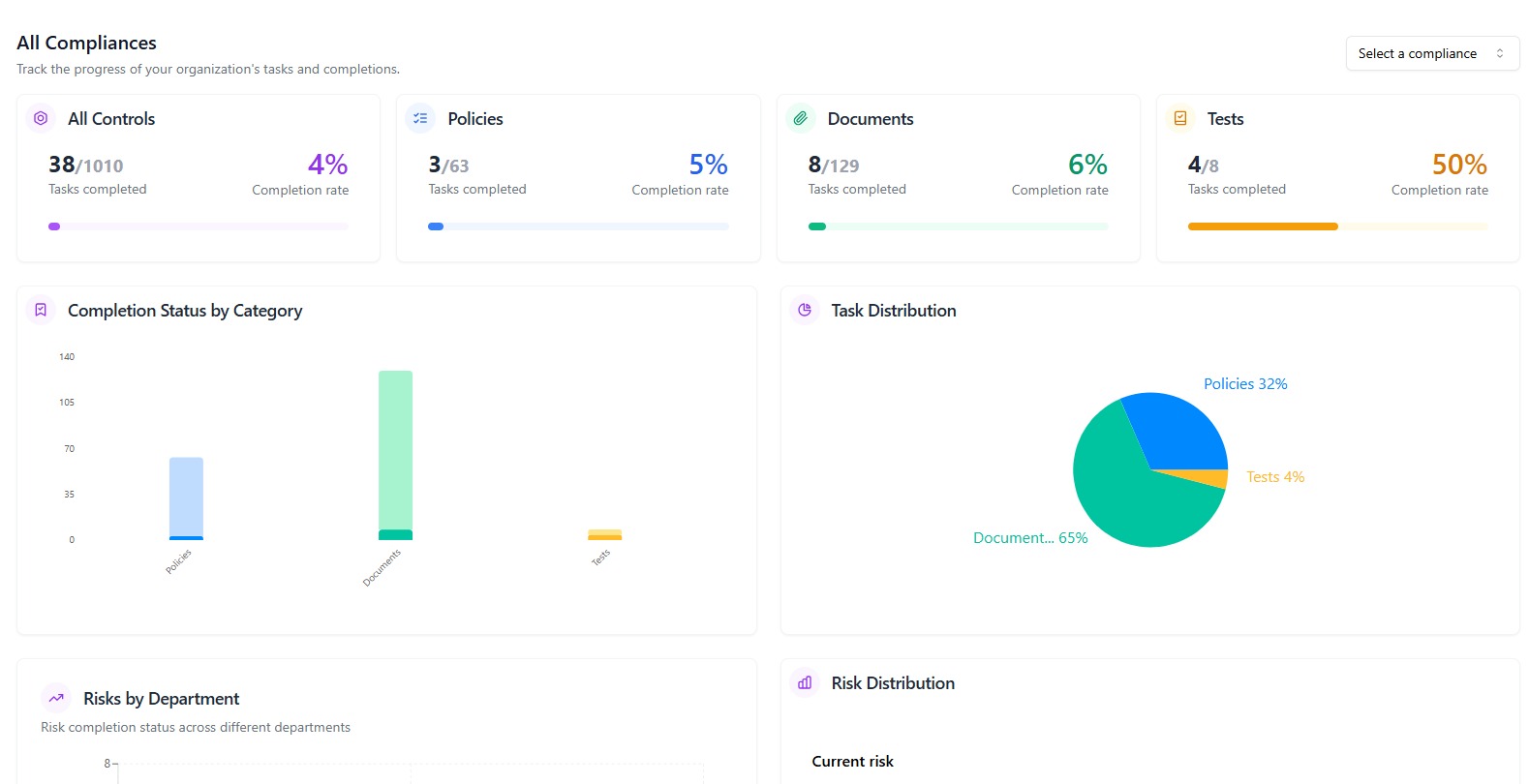
Can the platform automate evidence collection, data mapping, risk tracking, and compliance workflows?
Enterprise scalability
Can the platform support multiple business units, processing activities, vendors, systems, and subsidiaries?
Implementation effort
How much manual framework configuration is required before the organization can start using thatform?
Frequently Asked Questions
KSA PDPL compliance software is a platform that helps organizations manage compliance with Saudi Arabia’s Personal Data Protection Law by automating activities such as data mapping, processing records, consent and rights management, risk tracking, breach workflows, and evidence collection.
Organizations that fall within the scope of Saudi Arabia’s Personal Data Protection Law must comply with its applicable requirements. The exact obligations can depend on factors such as the organization, processing activities, personal data involved, and applicable regulations or guidance.
PDPL shares several concepts with GDPR, including requirements related to personal data processing, individual rights, consent, and data protection. However, PDPL is a separate Saudi legal framework with its own requirements, terminology, regulatory guidance, and enforcement environment. Organizations should therefore avoid assuming that GDPR compliance automatically means PDPL compliance.
PDPL includes requirements governing transfers of personal data outside the Kingdom. Whether specific data must be stored or processed inside Saudi Arabia depends on the applicable legal and regulatory requirements and the organization’s circumstances. Enterprises should assess their specific processing activities and current SDAIA requirements before making a localization decision.
Pricing varies according to factors such as company size, number of processing activities, users, integrations, required modules, implementation services, and hosting requirements. Global platforms may also require additional configuration for KSA-specific compliance, while KSA-focused platforms can reduce some of that implementation effort.
Final Verdict
The best KSA PDPL compliance software depends on your organization’s existing compliance stack and Saudi-specific requirements.
For multinational organizations already standardized on a global privacy platform, OneTrust, Securiti, or TrustArc may make sense.
For SaaS companies primarily focused on SOC 2 and security compliance, Vanta or Drata may be useful as part of a broader compliance stack.
But for Saudi enterprises, government vendors, and regulated organizations looking for a KSA-first automated PDPL compliance platform, Sahl is designed specifically for that use case.
Ready to simplify KSA PDPL compliance?

