



Business Continuity Management (BCM) Software
Run Business Impact Analysis, continuity plans, and disaster recovery from one AI-powered BCM platform
built to align with ISO 22301and Saudi
NCA requirements.
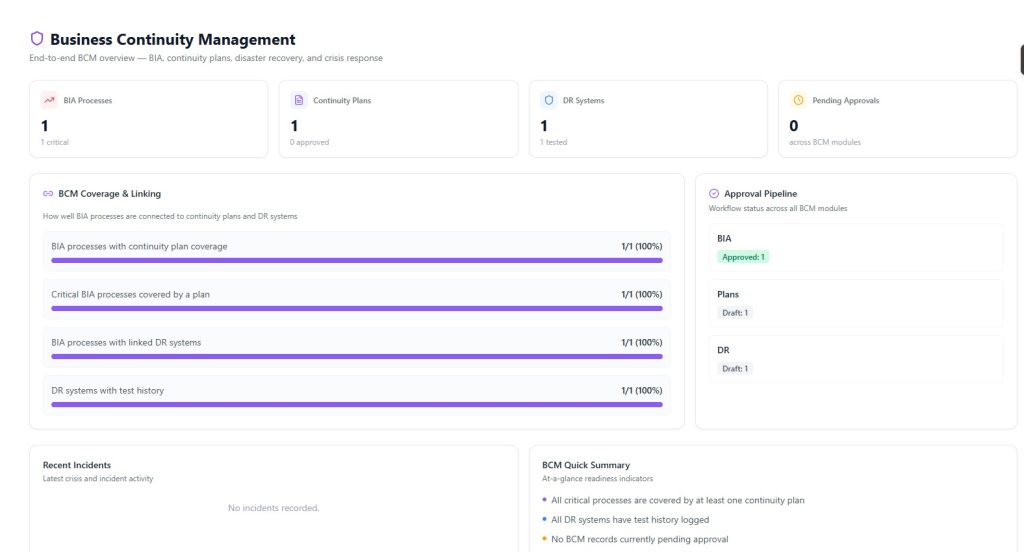
One BCM dashboard for every critical process
See BIA coverage, continuity plan status, and disaster recovery readiness in a single view. Sahl’s BCM dashboard shows exactly which critical processes are protected and which still need attention.
- Live coverage across BIA, plans, and DR systems
- Approval pipeline for every BCM module
- At-a-glance readiness summary, updated continuously
Business Impact Analysis (BIA), automated
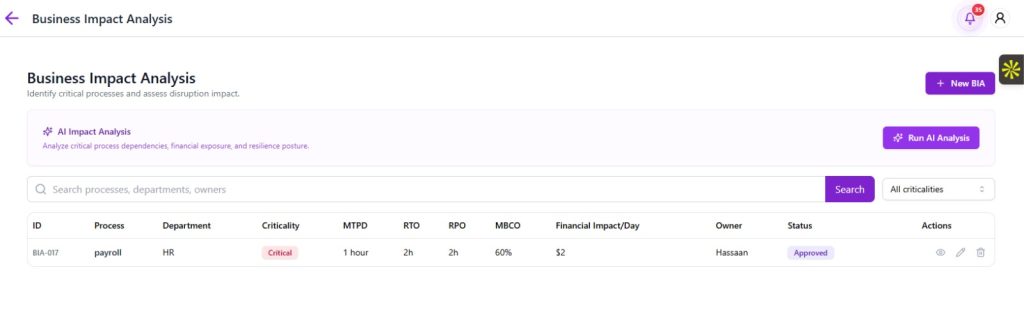
Identify critical processes and assess disruption impact with AI. Sahl calculates MTPD, RTO, RPO, MBCO, and daily financial impact — then flags every process still left uncovered.
- AI Impact Analysis suggests criticality and dependencies
- Search and filter by department, owner, or criticality
- Approval workflow built into every BIA record
Continuity plans that stay current
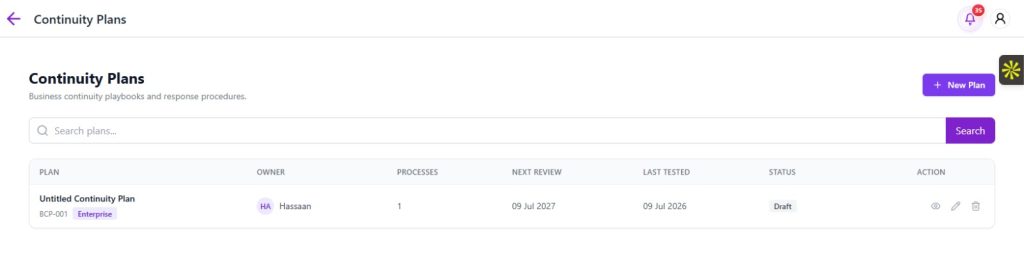
Build business continuity playbooks linked directly to your BIA processes. Sahl tracks plan owners, next review dates, and test history automatically so plans never go stale.
- Auto-linked to critical BIA processes
- Review and re-test reminders, sent automatically
- Enterprise-ready continuity plan templates
Disaster recovery, mapped to real RTO/RPO targets
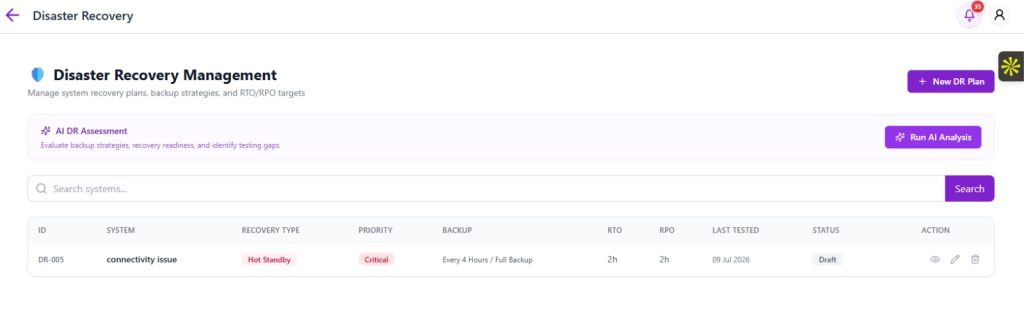
Manage system recovery plans, backup strategies, and DR testing in one place. Sahl’s AI DR Assessment flags recovery gaps before an incident finds them for you.
- AI DR Assessment evaluates backup strategy and readiness
- RTO and RPO tracked per system, not per spreadsheet
- Priority and recovery type visible at a glance