



GDPR: Protecting Privacy in the Age of Data
We live in a world where data is everywhere, from your online shopping habits to your Netflix recommendations. But with great data comes great responsibility. Enter the GDPR, the rulebook that changed the way organizations think about privacy.
What is GDPR and Why It Matters
The General Data Protection Regulation (GDPR) is Europe’s landmark privacy law, introduced in 2018. It gives individuals more control over their personal data and forces organizations to handle that data responsibly.
In simple terms: GDPR is about respecting people’s digital rights.
Key GDPR principles include:
- Accountability – Be able to prove you’re doing the right thing.
- Lawfulness, fairness, and transparency – Be honest about how data is used.
- Data minimization – Collect only what you need, nothing more.
- Storage limitation – Don’t keep data forever (no digital hoarding).
Turn GDPR Compliance into a Business Advantage
GDPR isn’t just for European companies, it affects any business that handles EU citizens’ personal data. And the stakes are high: fines can reach €20 million or 4% of global turnover, whichever is higher.
With continuously updated GDPR controls, Sahl keeps your organization aligned with evolving regulations. By ensuring compliance, you avoid penalties, strengthen brand credibility, and gain a competitive edge.
GDPR is often called the “gold standard” of data protection laws, inspiring privacy rules worldwide (like KSA’s PDPL and California’s CCPA).
Effortless GDPR Management at Scale
With Sahl, you can:
- Centralize GDPR Documentation – Maintain one secure source of truth.
- Automate Evidence Collection – Eliminate manual compliance tracking.
- Get Real-Time Alerts – Identify and resolve compliance gaps instantly.
- Conduct Security Training – Keep employees informed and compliant.
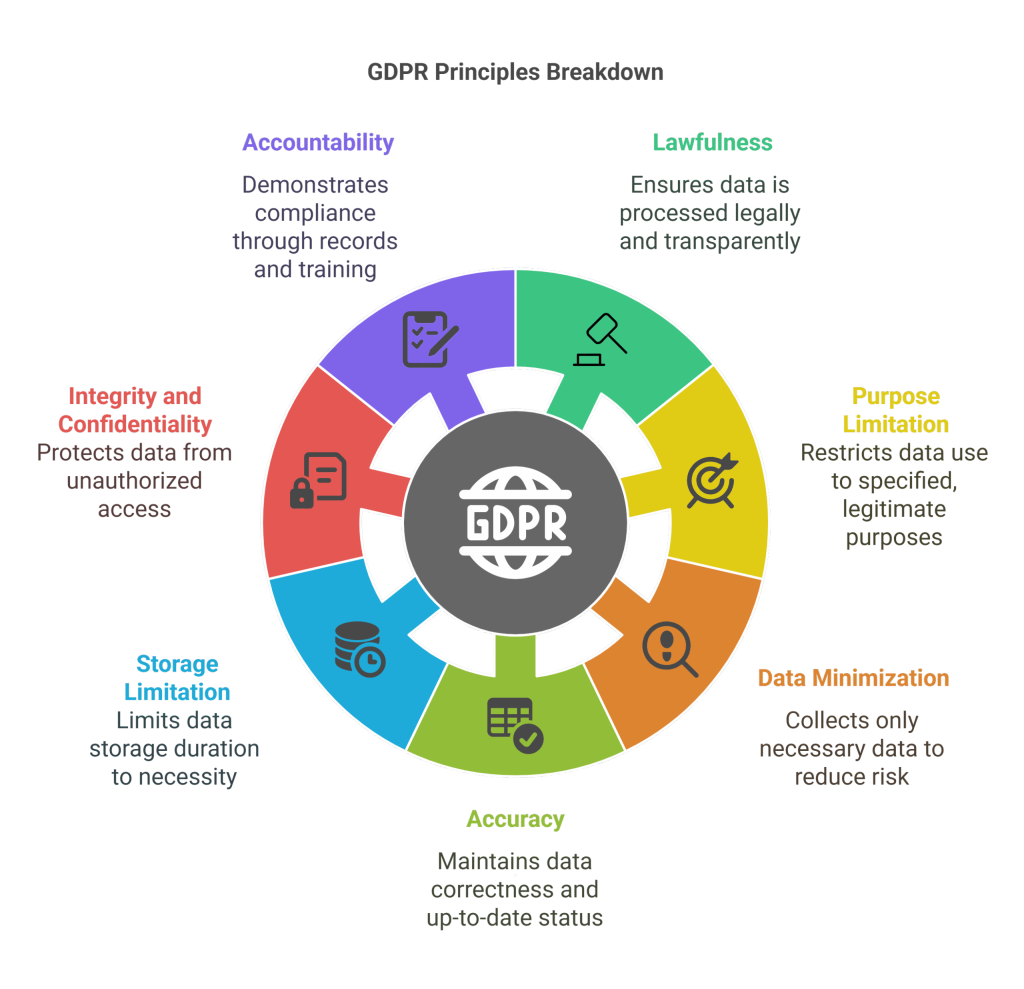
The 7 Key Principles of GDPR Compliance
- Lawfulness, Fairness & Transparency – Process data legally and inform users clearly about how their information is used.
- Purpose Limitation – Use personal data only for specified, legitimate purposes.
- Data Minimization – Collect only the data you truly need.
- Accuracy – Keep personal data up to date and correct errors promptly.
- Storage Limitation – Retain data only as long as necessary.
- Integrity & Confidentiality – Implement strong security measures like encryption and restricted access.
- Accountability – Keep detailed compliance records and conduct regular audits.
GDPR Rights You Must Respect
- Right to Access – Users can request copies of their data.
- Right to Rectification – Correct inaccurate information.
- Right to Erasure – Delete data when it’s no longer needed.
- Right to Restrict Processing – Temporarily pause data use.
- Right to Data Portability – Provide user data in a portable format.
- Right to Object – Stop processing data for certain purposes.
- Rights Related to Automated Decisions – Let users challenge decisions made without human involvement.
How Sahl Simplifies GDPR Compliance
- AI-Driven Compliance Tracking – Automate monitoring and reporting.
- Real-Time Security & Risk Alerts – Fix vulnerabilities before they cause fines.
- Seamless Integration – Connect Sahl with your existing tools.
FAQs
1. Does GDPR apply to companies outside the EU?
Yes. If you process personal data of EU residents, GDPR applies—no matter where your business is located.
2. What are the penalties for non-compliance?
Fines can reach €20 million or 4% of annual global turnover, whichever is higher.
3. What counts as personal data under GDPR?
Any information that identifies an individual, including names, emails, phone numbers, IP addresses, and biometric data.
4. How long can I store personal data?
Only as long as necessary for its original purpose. Clear retention policies are essential.
5. How does Sahl make GDPR compliance easier?
Sahl automates evidence collection, monitors compliance in real time, and integrates with your security stack to reduce manual work.

