


How Sahl’s AI-Powered GRC Automation Accelerates NCA ECC Compliance
Key Takeaways
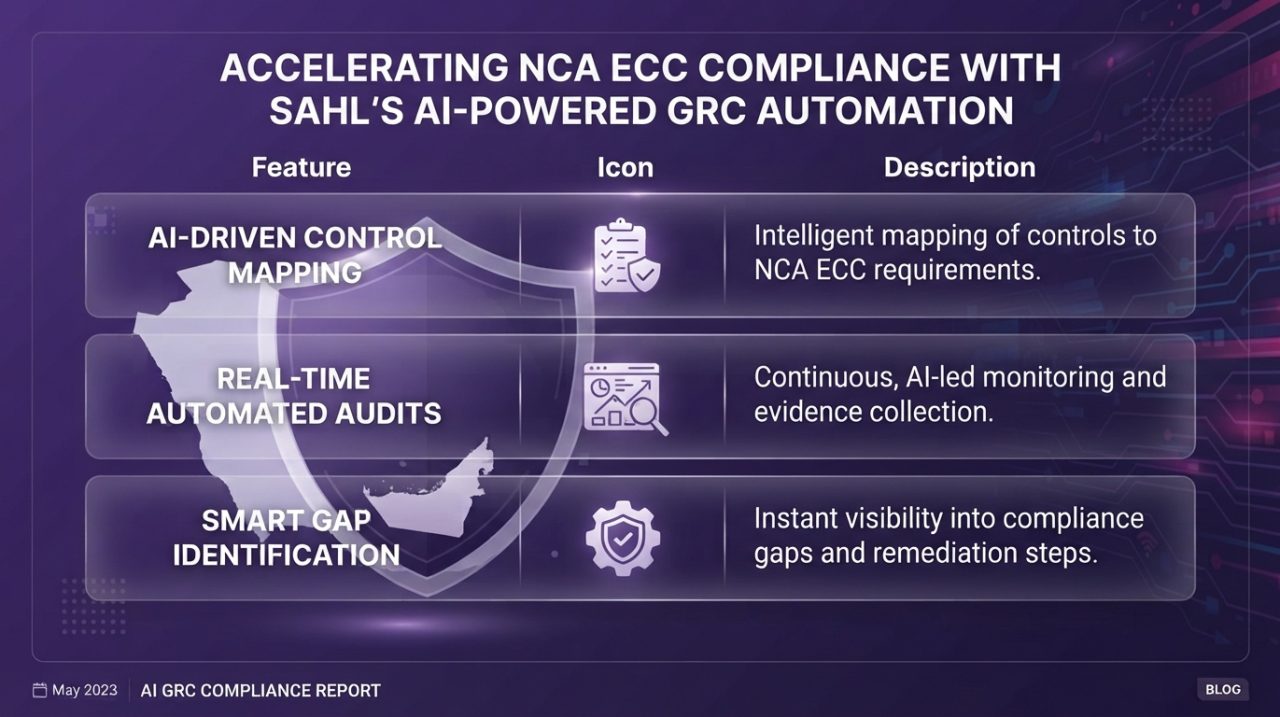
- Faster compliance: Automating repetitive compliance tasks can reduce the time teams spend collecting and organizing evidence.
- Automated evidence collection: Sahl helps centralize evidence from connected systems and compliance activities.
- Better visibility: Dashboards give security and compliance teams a centralized view of their NCA ECC compliance status.
- Less duplication: Control mapping can help organizations manage overlapping requirements across frameworks such as NCA ECC and ISO 27001.
- Continuous oversight: Centralized workflows help teams monitor compliance activities beyond the traditional audit cycle.
Why NCA ECC Compliance Is Becoming More Complex
Saudi organizations face an increasingly demanding cybersecurity and regulatory environment. The National Cybersecurity Authority’s Essential Cybersecurity Controls (NCA ECC) provide a structured set of cybersecurity requirements for organizations that fall within their scope.
For many organizations, maintaining compliance involves more than implementing security controls. Teams must also collect evidence, document activities, track remediation, assign responsibilities, and prepare for assessments.
When these activities are managed through spreadsheets, email, and shared folders, compliance teams can spend significant time on administrative work.
This is where NCA ECC compliance automation can help.
Sahl provides an AI-powered GRC environment that brings compliance workflows, evidence, controls, risks, and reporting into one centralized platform.
The Challenges of Manual NCA ECC Compliance
Manual compliance processes can create several challenges for security and compliance teams.
1. Evidence Collection Takes Time
Teams may need to collect evidence from multiple systems and departments. Finding the right documents, validating them, and keeping them updated can become a repetitive process.
A centralized GRC platform can help reduce this administrative burden by organizing evidence and compliance activities in one place.
2. Spreadsheet Management Creates Complexity
Spreadsheets can be useful for basic tracking, but they become harder to maintain as compliance programs grow.
Multiple versions, manual updates, and disconnected files can make it difficult to determine the current status of a control.
3. Compliance Visibility Can Be Limited
Leadership and security teams need visibility into compliance gaps and remediation progress.
When information is spread across different files and systems, creating an accurate compliance view can require significant manual effort.
4. Multiple Frameworks Create Duplicate Work
Organizations may need to manage NCA ECC alongside frameworks such as ISO 27001, SOC 2, or other regulatory requirements.
Without centralized control mapping, teams may repeat similar assessments and evidence collection activities for each framework.
How Sahl Supports NCA ECC Compliance Automation
Sahl helps organizations centralize and automate key parts of their GRC processes.
1. Streamline Evidence Collection
Sahl helps organizations organize compliance evidence from their existing processes and connected systems.
Instead of relying entirely on email attachments and shared folders, teams can maintain evidence within a centralized compliance environment.
This makes it easier to associate evidence with the relevant controls and maintain a clear record of compliance activities.
2. Simplify NCA ECC Control Management
Managing a large set of cybersecurity controls requires clear ownership and visibility.
Sahl provides a structured environment for managing controls, assigning responsibilities, tracking progress, and identifying areas that require attention.
Teams can use centralized dashboards to understand the current status of their compliance program.
3. Map Controls Across Frameworks
Organizations that follow multiple frameworks often encounter overlapping requirements.
Sahl helps teams map related controls across frameworks such as NCA ECC and ISO 27001. This can reduce duplicated work and provide a more consistent approach to compliance management.
Control mapping does not mean that meeting one framework automatically satisfies another. Instead, it helps teams identify areas of overlap and manage related requirements more efficiently.
4. Monitor Compliance Progress
Compliance is not only an activity that happens before an audit.
Organizations need processes for tracking remediation, reviewing evidence, monitoring controls, and addressing gaps over time.
Sahl provides centralized dashboards that help compliance and security teams monitor their program and identify areas that need attention.
5. Improve Audit Preparation
Preparing for an assessment can become difficult when evidence is scattered across multiple systems.
Sahl helps organizations organize compliance evidence and supporting documentation throughout the compliance lifecycle.
With information centralized, teams can spend less time searching for evidence when an audit or assessment approaches.
Traditional Compliance vs. GRC Automation
| Feature | Traditional Approach | Sahl GRC Automation |
|---|---|---|
| Evidence collection | Manual and distributed | Centralized and streamlined |
| Compliance tracking | Spreadsheets and email | Centralized workflows |
| Control management | Manual tracking | Structured control management |
| Framework mapping | Often duplicated | Centralized control mapping |
| Compliance visibility | Periodic reporting | Centralized dashboards |
| Audit preparation | Evidence gathered before assessment | Evidence organized throughout the compliance lifecycle |
Why Continuous Compliance Matters
Traditional compliance programs often focus heavily on assessment periods.
However, an organization’s security environment can change frequently. New systems, employees, vendors, applications, and configurations can all affect the organization’s risk and compliance posture.
A continuous approach helps teams maintain visibility throughout the year.
With Sahl, organizations can centralize compliance activities and monitor progress beyond the immediate needs of an audit.
This approach helps turn compliance from a periodic project into an ongoing management process.
Supporting Saudi Arabia’s Cybersecurity Compliance Requirements
Organizations operating in Saudi Arabia may need to manage multiple cybersecurity, privacy, and regulatory requirements depending on their industry and obligations.
NCA ECC may be one part of a broader compliance program that also includes standards such as ISO 27001 and other applicable regulatory frameworks.
A centralized GRC platform can help organizations manage these requirements without creating completely separate processes for every framework.
Sahl provides a unified environment for managing controls, evidence, risks, tasks, and compliance reporting.
How Sahl Helps Security and Compliance Teams
Sahl is designed to bring different compliance activities together in one environment.
Security and compliance teams can use Sahl to:
- Manage compliance controls
- Organize evidence
- Track remediation activities
- Assign compliance responsibilities
- Map controls across frameworks
- Monitor compliance progress
- Maintain audit-ready documentation
- Provide leadership with centralized compliance visibility
The result is a more structured approach to managing cybersecurity compliance.
Who Can Benefit From NCA ECC Compliance Automation?
NCA ECC compliance automation can be useful for organizations that manage complex cybersecurity requirements and large volumes of compliance evidence.
This may include:
- Financial services organizations
- Technology companies
- Healthcare organizations
- Government and public-sector entities
- Large enterprises
- Organizations preparing for cybersecurity assessments
- Businesses managing multiple compliance frameworks
The specific requirements that apply to an organization depend on its regulatory scope, industry, and applicable obligations.
The Bottom Line
NCA ECC compliance requires more than policies and documentation. Organizations need processes for managing controls, collecting evidence, addressing gaps, and maintaining visibility over time.
Manual processes can make these activities harder to manage as organizations grow.
Sahl’s AI-powered GRC platform helps organizations streamline NCA ECC compliance by centralizing controls, evidence, workflows, framework mapping, and reporting in one environment.
For Saudi organizations looking to build a more structured and scalable compliance program, NCA ECC compliance automation can help reduce administrative complexity and improve visibility across the compliance lifecycle.
Frequently Asked Questions
NCA ECC compliance refers to aligning an organization’s applicable cybersecurity practices and controls with the Essential Cybersecurity Controls (ECC) issued by Saudi Arabia’s National Cybersecurity Authority (NCA).The specific requirements and applicability depend on the organization’s regulatory scope and circumstances.
Sahl provides a centralized GRC platform for managing controls, evidence, compliance tasks, risks, remediation activities, and reporting. It helps organizations organize their compliance program and maintain visibility into their NCA ECC status.
NCA ECC compliance automation uses software to streamline repetitive compliance activities such as evidence management, control tracking, task assignment, reporting, and framework mapping.Automation can reduce manual administrative work and give teams greater visibility into their compliance program.
Yes. Sahl can help organizations manage multiple frameworks within a centralized GRC environment. This includes control mapping across frameworks such as NCA ECC and ISO 27001, helping teams identify overlapping requirements and reduce duplicated work.
Sahl supports ongoing compliance management by centralizing controls, evidence, tasks, assessments, and remediation activities. This allows teams to monitor compliance activities throughout the year rather than relying solely on periodic audit preparation.
NCA ECC compliance software can benefit organizations that need to manage large numbers of cybersecurity controls, evidence items, compliance tasks, and assessment requirements.It can be particularly useful for organizations with complex compliance programs or multiple frameworks.
Sahl helps organizations organize controls, evidence, tasks, and supporting documentation in a centralized environment. This can make it easier for teams to locate and present relevant evidence when preparing for an assessment.
Ready to Simplify NCA ECC Compliance?
See how Sahl can help your organization centralize GRC workflows, manage NCA ECC requirements, and maintain better compliance visibility.

