



Proactive vs Reactive Compliance: Saudi Arabia GRC
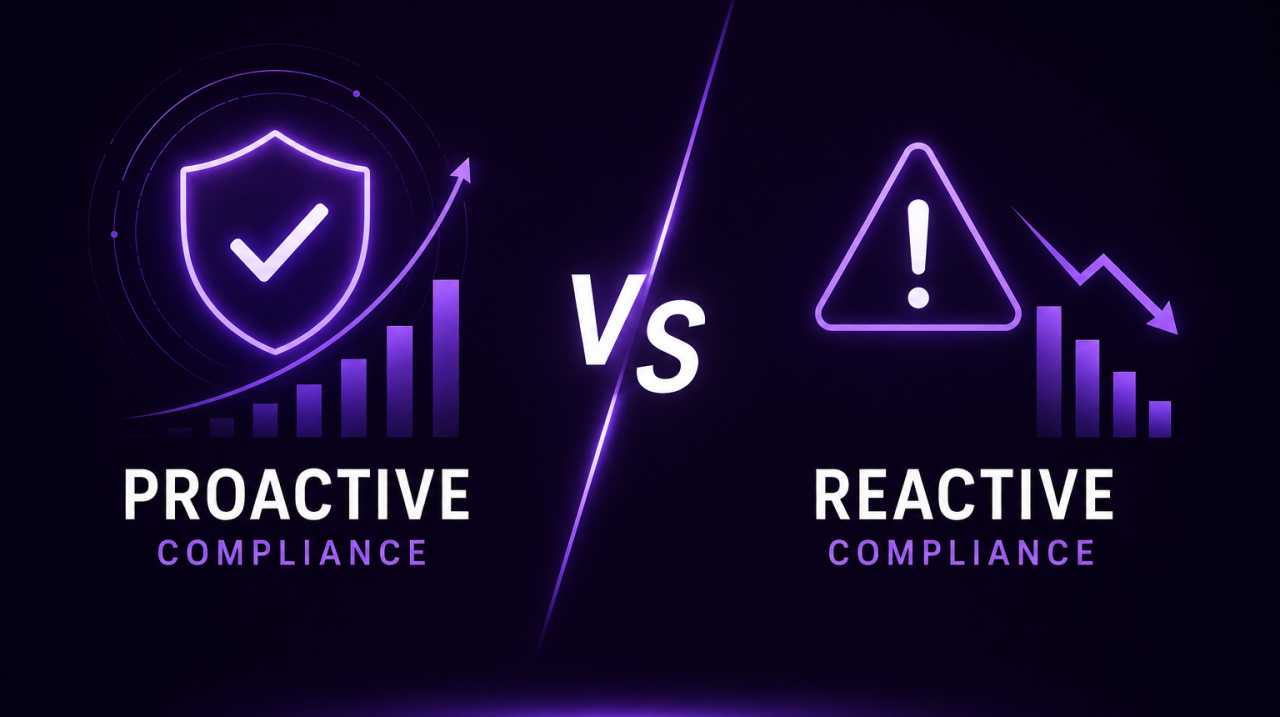
Proactive vs Reactive Compliance is a critical decision for organizations operating in Saudi Arabia’s evolving regulatory and GRC landscape. Choosing between a proactive or reactive approach directly impacts risk exposure, audit readiness, and long-term compliance efficiency.
Saudi Arabia’s frameworks such as PDPL, SAMA Cybersecurity Framework, and NCA ECC make it increasingly important for businesses to move beyond reactive compliance and adopt proactive governance strategies.
Yet many businesses still approach compliance reactively responding to audits, incidents, or regulatory requests only when they arise. While this approach may seem cost-effective in the short term, it often leads to higher risks, operational disruptions, and increased compliance costs.
“Reactive compliance fixes problems after they happen; proactive compliance prevents them before they start.”
In contrast, proactive Governance, Risk, and Compliance (GRC) enables organizations to identify risks early, streamline compliance processes, and build resilience before problems occur.
So, which strategy delivers better results for businesses in Saudi Arabia?
Understanding Reactive Compliance
Reactive compliance is an approach where organizations address compliance requirements only after a trigger event occurs. This may include a failed audit, a cybersecurity incident, a customer complaint, or a new regulatory requirement.
While reactive compliance can help resolve immediate issues, it often creates a cycle of continuous firefighting. Teams spend more time fixing problems than preventing them, leading to inefficiencies and increased business risk.
Common characteristics of reactive compliance include:
- Manual compliance tracking
- Last-minute audit preparation
- Limited risk visibility
- Siloed processes and documentation
- Delayed response to regulatory changes
For growing organizations, these challenges can become increasingly difficult to manage as operations expand.
What Is Proactive GRC?
Proactive GRC takes a different approach. Instead of waiting for issues to occur, organizations establish structured processes to continuously monitor risks, manage compliance obligations, and improve governance practices.
A proactive GRC strategy helps businesses:
- Identify risks before they impact operations
- Maintain continuous compliance readiness
- Improve decision-making through better visibility
- Reduce operational and regulatory risks
- Strengthen cybersecurity and resilience
Rather than treating compliance as a one-time activity, proactive GRC embeds risk and compliance management into everyday business operations.
Proactive GRC vs Reactive Compliance: A Comparison
Risk Management
Reactive compliance focuses on addressing risks after they materialize. This often results in unexpected disruptions, financial losses, and reputational damage.
Proactive GRC continuously identifies, assesses, and monitors risks, enabling organizations to take preventive action before issues escalate.
Audit Readiness
Organizations using reactive compliance often scramble to gather documentation and evidence before audits.
With proactive GRC, policies, controls, and compliance records are maintained continuously, making audit preparation significantly easier and less stressful.
Regulatory Compliance
Saudi regulations continue to evolve across multiple sectors. Businesses that rely on reactive processes may struggle to keep pace with changing requirements.
Proactive GRC provides greater visibility into regulatory obligations and supports continuous compliance monitoring.
Operational Efficiency
Manual compliance activities consume valuable time and resources.
Proactive GRC automates workflows, centralizes documentation, and improves collaboration across departments, increasing operational efficiency.
Business Growth
As organizations scale, compliance complexity grows.
Reactive compliance often becomes a bottleneck for expansion, while proactive GRC creates a scalable framework that supports sustainable growth.
Proactive GRC vs Reactive Compliance: Key Differences
| Area | Proactive GRC | Reactive Compliance |
|---|---|---|
| Risk Management | Identifies risks before they occur | Responds after incidents happen |
| Compliance Monitoring | Continuous oversight | Periodic checks |
| Audit Readiness | Always audit-ready | Last-minute preparation |
| Operational Efficiency | Automated and streamlined | Manual and fragmented |
| Cost Impact | Lower long-term costs | Higher remediation costs |
| Decision-Making | Data-driven insights | Limited visibility |
| Business Growth | Supports scalability | Can become a growth bottleneck |
Why Saudi Businesses Are Moving Toward Proactive GRC
Several factors are driving increased GRC adoption across the Kingdom.
Evolving Regulatory Requirements
Organizations must comply with a growing number of regulations covering cybersecurity, data privacy, governance, and operational risk.
Maintaining compliance through spreadsheets and disconnected processes is becoming increasingly difficult.
Rising Cybersecurity Risks
Cybersecurity threats continue to increase across industries. Businesses require stronger governance frameworks to identify vulnerabilities, manage risks, and strengthen resilience.
A proactive GRC strategy supports continuous monitoring and faster response to emerging threats.
Vision 2030 and Digital Transformation
Saudi Arabia’s Vision 2030 initiatives are accelerating digital transformation across both public and private sectors.
As organizations modernize operations and adopt new technologies, structured risk and compliance management becomes essential for maintaining trust and operational stability.
Increased Stakeholder Expectations
Customers, investors, partners, and regulators increasingly expect transparency, accountability, and effective risk management practices.
Organizations that demonstrate strong governance often gain a competitive advantage in the marketplace.
The Cost of Waiting
Many organizations delay GRC investments until a compliance issue arises. However, the costs associated with reactive compliance often exceed the investment required to establish proactive controls.
Potential consequences include:
- Regulatory penalties
- Audit findings
- Operational disruptions
- Data breaches
- Reputational damage
- Increased remediation costs
Addressing these issues after they occur is typically more expensive than preventing them in the first place.
Signs Your Organization Needs Proactive GRC
| Warning Sign | Business Impact |
|---|---|
| Compliance tracked in spreadsheets | Increased risk of errors and missed deadlines |
| Audit preparation takes weeks | Reduced productivity and higher stress |
| Limited visibility into risks | Delayed decision-making |
| Frequent policy updates | Difficulty maintaining compliance |
| Growing regulatory obligations | Increased operational complexity |
| Expanding operations | Greater governance and oversight requirements |
Building a Proactive GRC Strategy
Transitioning from reactive compliance to proactive GRC does not require a complete organizational overhaul.
Businesses can begin by:
- Establishing a centralized risk management framework
- Defining compliance responsibilities
- Automating compliance workflows
- Conducting regular risk assessments
- Monitoring regulatory changes
- Implementing continuous reporting and oversight
The goal is to create a sustainable framework that grows alongside the organization.
How Technology Supports Proactive GRC
Modern GRC platforms help organizations move beyond manual processes by providing:
- Centralized compliance management
- Risk registers and assessments
- Policy management
- Audit tracking
- Automated workflows
- Real-time reporting and dashboards
By leveraging technology, businesses can improve visibility, reduce administrative burden, and strengthen overall compliance performance.
Organizations looking to modernize their compliance programs can explore how GRC solutions in Saudi Arabia are helping businesses manage risk more effectively: https://getsahl.io/grc-in-saudi-arabia/
Conclusion
When comparing proactive GRC and reactive compliance, the difference is clear. Reactive approaches focus on responding to problems after they occur, while proactive GRC helps organizations anticipate risks, maintain compliance, and support long-term growth.
As regulatory expectations continue to evolve across Saudi Arabia, businesses that invest in proactive GRC are better positioned to strengthen resilience, improve governance, and achieve sustainable success.
The question is no longer whether organizations need GRC—it is whether they can afford to remain reactive in an increasingly complex business environment.
